

What to visit in Ravenna

The Mosaics of Ravenna
Ravenna is world-famous for its extraordinary Byzantine and early Christian mosaics.
In the city’s basilicas, mausoleums and baptisteries, visitors can admire decorations of breathtaking beauty, where colours, light and images tell the story of centuries of history.
From the Basilica of San Vitale to the Mausoleum of Galla Placidia, from Sant’Apollinare Nuovo to the Baptisteries, mosaics are one of the most distinctive expressions of Ravenna’s cultural identity.
Click and Discover the mosaics of Ravenna.
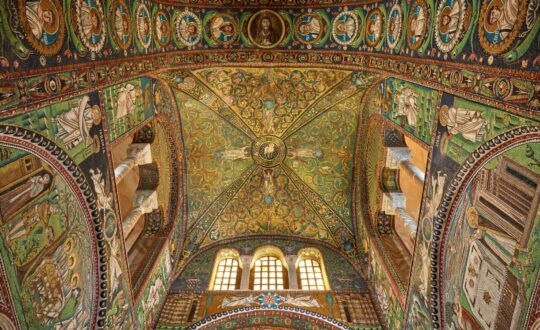
Basilica of San Vitale
The Basilica of San Vitale is one of Ravenna’s most famous landmarks and one of the great masterpieces of early Christian and Byzantine art.
Inside, the celebrated mosaics of the presbytery and apse tell the story of Ravenna’s splendour in the 6th century through colours, images and extraordinarily intricate details.
The basilica is located in the heart of the city, next to the Mausoleum of Galla Placidia, and is a must-see for anyone visiting Ravenna.
Click and Discover the Basilica of San Vitale.
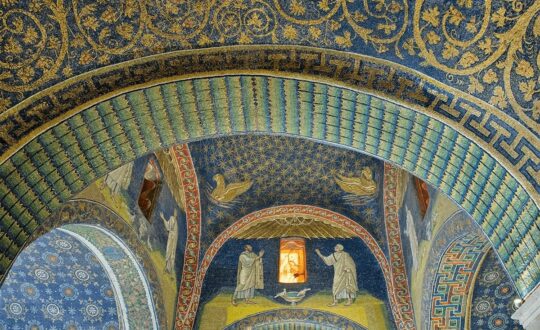
Mausoleum of Galla Placidia
Small and understated on the outside, the Mausoleum of Galla Placidia surprises visitors with the extraordinary beauty and richness of its interior.
Its famous vaulted ceiling, decorated with a deep blue sky and golden stars, is one of the most iconic masterpieces of Ravenna’s mosaic art.
Located next to the Basilica of San Vitale, the mausoleum can easily be visited as part of the same itinerary through the historic city centre.
Click and discover the Mausoleum of Galla Placidia!
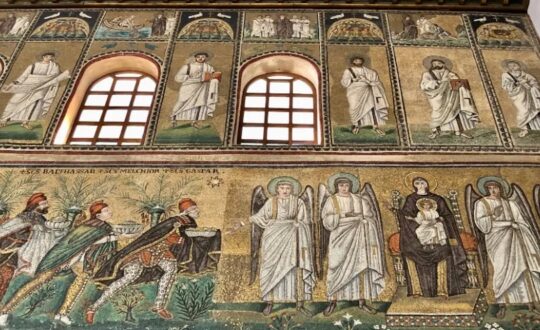
Basilica of Sant’ Apollinare Nuovo
In the heart of Ravenna, the Basilica of Sant’Apollinare Nuovo houses one of the city’s most famous mosaic decorations.
Commissioned by Theodoric, the basilica tells the story of Ravenna’s artistic and religious evolution through its mosaics, spanning the Ostrogothic and Byzantine periods.
It is an essential stop for anyone wishing to understand why Ravenna is known throughout the world as the City of Mosaics.
Click and discover the Basilica of Sant’Apollinare Nuovo!
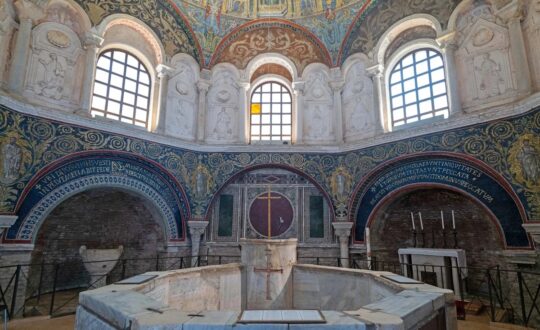
Neonian Baptistery
The Neonian Baptistery, also known as the Baptistery of the Orthodox, is one of the oldest monuments in Ravenna and forms part of the city’s UNESCO World Heritage Site.
Its octagonal structure houses an extraordinary mosaic decoration on the dome, featuring the famous depiction of the Baptism of Christ surrounded by the Apostles.
It is a particularly fascinating stop for discovering early Christian Ravenna and its remarkable artistic heritage.
Click and discover the Neonian Baptistery!
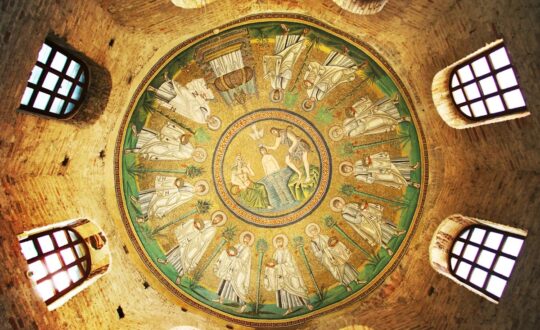
Arian Baptistery
Built during the reign of Theodoric, the Arian Baptistery bears witness to the presence of the Arian community in Ostrogothic Ravenna.
This small building preserves an evocative mosaic decoration on its dome, featuring the depiction of the Baptism of Christ.
It is an interesting place to visit to gain a deeper understanding of Ravenna’s history during the Ostrogothic period and the intertwining of cultures and religions that shaped the city.
Click and discover the Arian Baptistery!

Dante Alighieri’s Tomb
In the heart of Ravenna lies the tomb of Dante Alighieri, the great Italian poet and author of the Divine Comedy.
Dante spent the final years of his life in Ravenna, where he was buried in 1321. His tomb is one of the city’s most significant landmarks and an important stop for anyone wishing to discover the connection between Ravenna and the poet.
Click and discover Dante Alighieri’s Tomb!
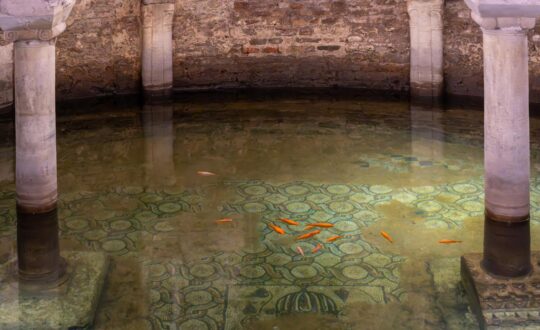
The Flooded Crypt of San Francesco and Its Goldfish
Inside the Basilica of San Francesco, in the heart of Ravenna, lies one of the city’s most unusual attractions: a fascinating flooded crypt where numerous goldfish swim.
The water covering the floor allows visitors to admire the ancient mosaics beneath the surface, creating a truly unique and enchanting atmosphere that children particularly enjoy.
Click and discover the flooded crypt of San Francesco!
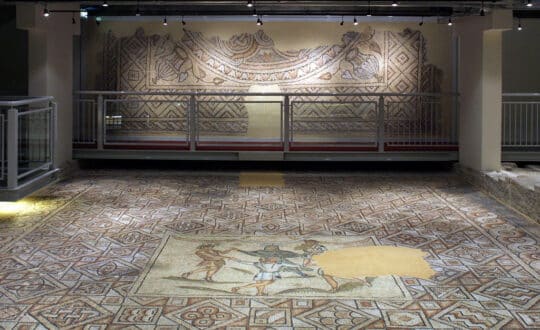
The Domus of the Stone Carpets
Just a few steps from the Basilica of San Vitale, beneath the Church of Sant’Eufemia, lies one of Ravenna’s most fascinating archaeological treasures: the Domus of the Stone Carpets.
Discovered during construction works in the 1990s, this remarkable archaeological site preserves the remains of ancient Roman and Byzantine houses, featuring beautiful floors decorated with mosaics and multicoloured marble. The most important complex dates back to the 6th century and includes numerous rooms that bear witness to the wealth and elegance of homes during that period.
Among its most beautiful works is the famous Dance of the Genii of the Four Seasons, a floor mosaic depicting dancing figures accompanied by a musician. A fascinating visit to discover another side of ancient Ravenna, hidden beneath the streets of the city.
Click and discover the Domus of the Stone Carpets!

Squares (Piazzas) and Monumental Gates of Ravenna
Piazza del Popolo is the heart of Ravenna’s historic city centre and one of the city’s most iconic landmarks. It is the perfect starting point for a stroll through the historic centre, exploring its historic buildings, charming streets and beautiful squares.
Ravenna also preserves numerous monumental gates and remains of its ancient city walls, offering a glimpse into the city’s long and fascinating history.
Exploring its squares, gates and ancient walls allows visitors to discover a different side of Ravenna, beyond its famous mosaics and monuments.
Click and discover Ravenna’s squares and monumental gates!
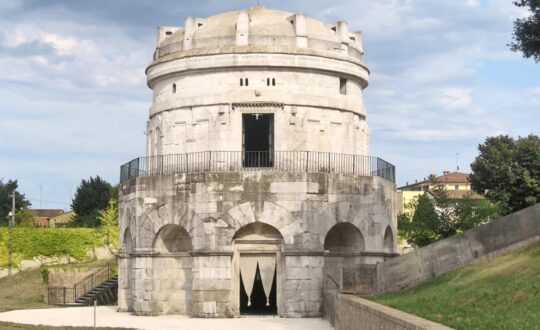
Mausoleum of Theodoric
Among the most distinctive monuments in Ravenna is the Mausoleum of Theodoric, commissioned by the Ostrogothic king around 520 AD as his own burial place.
What makes it truly unique is above all its magnificent monolithic dome, carved from a single enormous block of Istrian stone: an extraordinary architectural and engineering achievement that continues to amaze visitors with its impressive size and ingenuity.
The mausoleum is set within a large green area, just a short distance from the historic city centre, and is included on UNESCO’s World Heritage List.
Click and Discover the Mausoleum of Theodoric.

Basilica of Sant’Apollinare in Classe
Just a few kilometers from the centre of Ravenna stands the Basilica of Sant’Apollinare in Classe, one of the city’s most important early Christian and Byzantine monuments.
The impressive basilica captivates visitors with its majestic interiors and the extraordinary mosaic in the apse, dominated by the figure of Saint Apollinaris.
It is a must-see for anyone wishing to discover Ravenna’s historical and artistic heritage beyond the historic city centre.
Click and discover the Basilica of Sant’Apollinare in Classe!
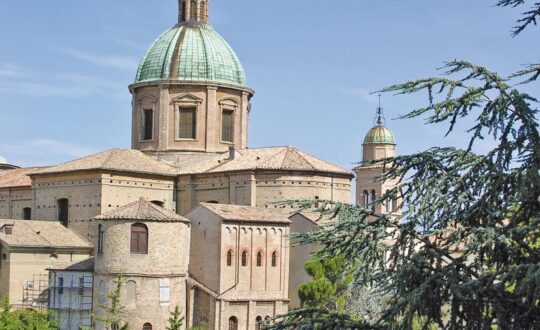
Archiepiscopal Chapel (or St. Andrew Chapel)
The Archiepiscopal Chapel, also known as the St. Andrew Chapel, is part of Ravenna’s UNESCO World Heritage Site.
Built as a private oratory during the Ostrogothic period, it preserves precious mosaic decorations and represents an important testament to the city’s religious and artistic history.
It is a particularly interesting place to visit for anyone wishing to explore Ravenna’s UNESCO heritage beyond its best-known basilicas and monuments.
Click and discover the Archiepiscopal Chapel!

Ravenna’s UNESCO World Heritage Sites
Just a few minutes from Lido Adriano, Ravenna is home to a UNESCO World Heritage Site comprising eight monuments dating back to the 5th and 6th centuries, bearing witness to one of the most important periods in the city’s history.
The UNESCO heritage monuments includes the Basilica of San Vitale, the Mausoleum of Galla Placidia, the Neonian Baptistery, the Basilica of Sant’Apollinare Nuovo, the Archiepiscopal Chapel, the Arian Baptistery, the Mausoleum of Theodoric and the Basilica of Sant’Apollinare in Classe.
Visiting these monuments means embarking on a journey through Roman, Ostrogothic and Byzantine Ravenna, while admiring some of the finest examples of early Christian and Byzantine mosaic art.
Click and discover Ravenna’s 8 UNESCO World Heritage Sites!

Classense Library
A cultural gem and one of the most important historic libraries in Italy. Located in the heart of Ravenna, the Biblioteca Classense houses a precious collection of manuscripts, rare books and modern collections. It also offers spaces for study and research, as well as a wide range of cultural events and activities open to the public.
Click here and discover the Classense Library !
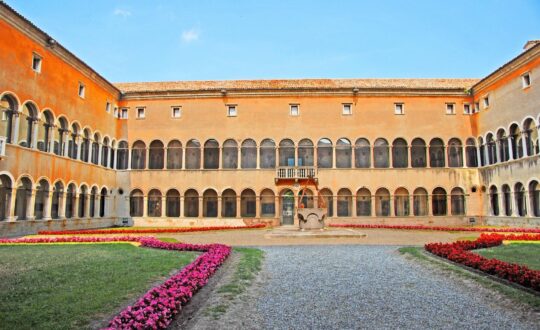
The Museums of Ravenna
Ravenna is much more than mosaics and monuments: its museums preserve works of art, archaeological finds and historical artefacts that tell the story of the city and its rich cultural heritage.
MAR – Ravenna City Art Museum
Housed in the Loggetta Lombardesca, the museum features art collections, temporary exhibitions and displays ranging from ancient to contemporary art.
National Museum of Ravenna
Located within the San Vitale complex, it houses important archaeological finds, Byzantine sculptures and collections of decorative arts.
Click and Discover the National Museum
Archiepiscopal Museum
It preserves precious works of art and artefacts from Ravenna’s history, including the famous ivory Throne of Maximian and the Chapel of Sant’Andrea, a UNESCO World Heritage Site.
Click and Discover the Archiepiscopal Museum
Dante Alighieri Museum
Just a short walk from Dante’s Tomb, the museum explores the life, works and legacy of the great Italian poet through artefacts, images and historical documents.
Click and Discover the Dante Alighieri Museum
Classis Ravenna – Museum of the City and Territory
Located in Classe, the museum tells the thousand-year history of Ravenna and its surrounding area, from the city’s origins through the Roman, Gothic, Byzantine and medieval periods.
Click and Discover Classis Ravenna
Byron Museum and Museum of the Italian Risorgimento
Housed in Palazzo Guiccioli, these museums offer an exhibition dedicated to Lord Byron and the history of the Italian Risorgimento, featuring multimedia and interactive displays.
Click and Discover the Byron Museum and Museum of the Risorgimento
→ Click and Discover ALL the museums of Ravenna
The Mosaics of Ravenna
Ravenna is world-famous for its extraordinary Byzantine and early Christian mosaics.
In the city’s basilicas, mausoleums and baptisteries, visitors can admire decorations of breathtaking beauty, where colours, light and images tell the story of centuries of history.
From the Basilica of San Vitale to the Mausoleum of Galla Placidia, from Sant’Apollinare Nuovo to the Baptisteries, mosaics are one of the most distinctive expressions of Ravenna’s cultural identity.
Click and Discover the mosaics of Ravenna.
Basilica of San Vitale
The Basilica of San Vitale is one of Ravenna’s most famous landmarks and one of the great masterpieces of early Christian and Byzantine art.
Inside, the celebrated mosaics of the presbytery and apse tell the story of Ravenna’s splendour in the 6th century through colours, images and extraordinarily intricate details.
The basilica is located in the heart of the city, next to the Mausoleum of Galla Placidia, and is a must-see for anyone visiting Ravenna.
Click and Discover the Basilica of San Vitale.
Mausoleum of Galla Placidia
Small and understated on the outside, the Mausoleum of Galla Placidia surprises visitors with the extraordinary beauty and richness of its interior.
Its famous vaulted ceiling, decorated with a deep blue sky and golden stars, is one of the most iconic masterpieces of Ravenna’s mosaic art.
Located next to the Basilica of San Vitale, the mausoleum can easily be visited as part of the same itinerary through the historic city centre.
Click and discover the Mausoleum of Galla Placidia!
Basilica of Sant’ Apollinare Nuovo
In the heart of Ravenna, the Basilica of Sant’Apollinare Nuovo houses one of the city’s most famous mosaic decorations.
Commissioned by Theodoric, the basilica tells the story of Ravenna’s artistic and religious evolution through its mosaics, spanning the Ostrogothic and Byzantine periods.
It is an essential stop for anyone wishing to understand why Ravenna is known throughout the world as the City of Mosaics.
Click and discover the Basilica of Sant’Apollinare Nuovo!
Neonian Baptistery
The Neonian Baptistery, also known as the Baptistery of the Orthodox, is one of the oldest monuments in Ravenna and forms part of the city’s UNESCO World Heritage Site.
Its octagonal structure houses an extraordinary mosaic decoration on the dome, featuring the famous depiction of the Baptism of Christ surrounded by the Apostles.
It is a particularly fascinating stop for discovering early Christian Ravenna and its remarkable artistic heritage.
Click and discover the Neonian Baptistery!
Arian Baptistery
Built during the reign of Theodoric, the Arian Baptistery bears witness to the presence of the Arian community in Ostrogothic Ravenna.
This small building preserves an evocative mosaic decoration on its dome, featuring the depiction of the Baptism of Christ.
It is an interesting place to visit to gain a deeper understanding of Ravenna’s history during the Ostrogothic period and the intertwining of cultures and religions that shaped the city.
Click and discover the Arian Baptistery!
Dante Alighieri’s Tomb
In the heart of Ravenna lies the tomb of Dante Alighieri, the great Italian poet and author of the Divine Comedy.
Dante spent the final years of his life in Ravenna, where he was buried in 1321. His tomb is one of the city’s most significant landmarks and an important stop for anyone wishing to discover the connection between Ravenna and the poet.
Click and discover Dante Alighieri’s Tomb!
The Flooded Crypt of San Francesco and Its Goldfish
Inside the Basilica of San Francesco, in the heart of Ravenna, lies one of the city’s most unusual attractions: a fascinating flooded crypt where numerous goldfish swim.
The water covering the floor allows visitors to admire the ancient mosaics beneath the surface, creating a truly unique and enchanting atmosphere that children particularly enjoy.
Click and discover the flooded crypt of San Francesco!
The Domus of the Stone Carpets
Just a few steps from the Basilica of San Vitale, beneath the Church of Sant’Eufemia, lies one of Ravenna’s most fascinating archaeological treasures: the Domus of the Stone Carpets.
Discovered during construction works in the 1990s, this remarkable archaeological site preserves the remains of ancient Roman and Byzantine houses, featuring beautiful floors decorated with mosaics and multicoloured marble. The most important complex dates back to the 6th century and includes numerous rooms that bear witness to the wealth and elegance of homes during that period.
Among its most beautiful works is the famous Dance of the Genii of the Four Seasons, a floor mosaic depicting dancing figures accompanied by a musician. A fascinating visit to discover another side of ancient Ravenna, hidden beneath the streets of the city.
Click and discover the Domus of the Stone Carpets!
Squares (Piazzas) and Monumental Gates of Ravenna
Piazza del Popolo is the heart of Ravenna’s historic city centre and one of the city’s most iconic landmarks. It is the perfect starting point for a stroll through the historic centre, exploring its historic buildings, charming streets and beautiful squares.
Ravenna also preserves numerous monumental gates and remains of its ancient city walls, offering a glimpse into the city’s long and fascinating history.
Exploring its squares, gates and ancient walls allows visitors to discover a different side of Ravenna, beyond its famous mosaics and monuments.
Click and discover Ravenna’s squares and monumental gates!
Mausoleum of Theodoric
Among the most distinctive monuments in Ravenna is the Mausoleum of Theodoric, commissioned by the Ostrogothic king around 520 AD as his own burial place.
What makes it truly unique is above all its magnificent monolithic dome, carved from a single enormous block of Istrian stone: an extraordinary architectural and engineering achievement that continues to amaze visitors with its impressive size and ingenuity.
The mausoleum is set within a large green area, just a short distance from the historic city centre, and is included on UNESCO’s World Heritage List.
Click and Discover the Mausoleum of Theodoric.
Basilica of Sant’Apollinare in Classe
Just a few kilometers from the centre of Ravenna stands the Basilica of Sant’Apollinare in Classe, one of the city’s most important early Christian and Byzantine monuments.
The impressive basilica captivates visitors with its majestic interiors and the extraordinary mosaic in the apse, dominated by the figure of Saint Apollinaris.
It is a must-see for anyone wishing to discover Ravenna’s historical and artistic heritage beyond the historic city centre.
Click and discover the Basilica of Sant’Apollinare in Classe!
Archiepiscopal Chapel (or St. Andrew Chapel)
The Archiepiscopal Chapel, also known as the St. Andrew Chapel, is part of Ravenna’s UNESCO World Heritage Site.
Built as a private oratory during the Ostrogothic period, it preserves precious mosaic decorations and represents an important testament to the city’s religious and artistic history.
It is a particularly interesting place to visit for anyone wishing to explore Ravenna’s UNESCO heritage beyond its best-known basilicas and monuments.
Click and discover the Archiepiscopal Chapel!
Ravenna’s UNESCO World Heritage Sites
Just a few minutes from Lido Adriano, Ravenna is home to a UNESCO World Heritage Site comprising eight monuments dating back to the 5th and 6th centuries, bearing witness to one of the most important periods in the city’s history.
The UNESCO heritage monuments includes the Basilica of San Vitale, the Mausoleum of Galla Placidia, the Neonian Baptistery, the Basilica of Sant’Apollinare Nuovo, the Archiepiscopal Chapel, the Arian Baptistery, the Mausoleum of Theodoric and the Basilica of Sant’Apollinare in Classe.
Visiting these monuments means embarking on a journey through Roman, Ostrogothic and Byzantine Ravenna, while admiring some of the finest examples of early Christian and Byzantine mosaic art.
Click and discover Ravenna’s 8 UNESCO World Heritage Sites!
Classense Library
A cultural gem and one of the most important historic libraries in Italy. Located in the heart of Ravenna, the Biblioteca Classense houses a precious collection of manuscripts, rare books and modern collections. It also offers spaces for study and research, as well as a wide range of cultural events and activities open to the public.
Click here and discover the Classense Library !
The Museums of Ravenna
Ravenna is much more than mosaics and monuments: its museums preserve works of art, archaeological finds and historical artefacts that tell the story of the city and its rich cultural heritage.
MAR – Ravenna City Art Museum
Housed in the Loggetta Lombardesca, the museum features art collections, temporary exhibitions and displays ranging from ancient to contemporary art.
National Museum of Ravenna
Located within the San Vitale complex, it houses important archaeological finds, Byzantine sculptures and collections of decorative arts.
Click and Discover the National Museum
Archiepiscopal Museum
It preserves precious works of art and artefacts from Ravenna’s history, including the famous ivory Throne of Maximian and the Chapel of Sant’Andrea, a UNESCO World Heritage Site.
Click and Discover the Archiepiscopal Museum
Dante Alighieri Museum
Just a short walk from Dante’s Tomb, the museum explores the life, works and legacy of the great Italian poet through artefacts, images and historical documents.
Click and Discover the Dante Alighieri Museum
Classis Ravenna – Museum of the City and Territory
Located in Classe, the museum tells the thousand-year history of Ravenna and its surrounding area, from the city’s origins through the Roman, Gothic, Byzantine and medieval periods.
Click and Discover Classis Ravenna
Byron Museum and Museum of the Italian Risorgimento
Housed in Palazzo Guiccioli, these museums offer an exhibition dedicated to Lord Byron and the history of the Italian Risorgimento, featuring multimedia and interactive displays.
Click and Discover the Byron Museum and Museum of the Risorgimento
→ Click and Discover ALL the museums of Ravenna