
MENU

The Origins of Lido Adriano: Land Reclamation, Countryside and Rice Fields

Before the Farmland: From the Roman Empire to Land Reclamation

Long before becoming one of the best-known seaside resorts on the Ravenna Riviera, this stretch of coastline had a completely different appearance.

Where the beach, town and seaside establishments stand today, there was once an extensive coastal landscape made up of sea, brackish lagoons, navigable canals, marshes and coastal dunes.

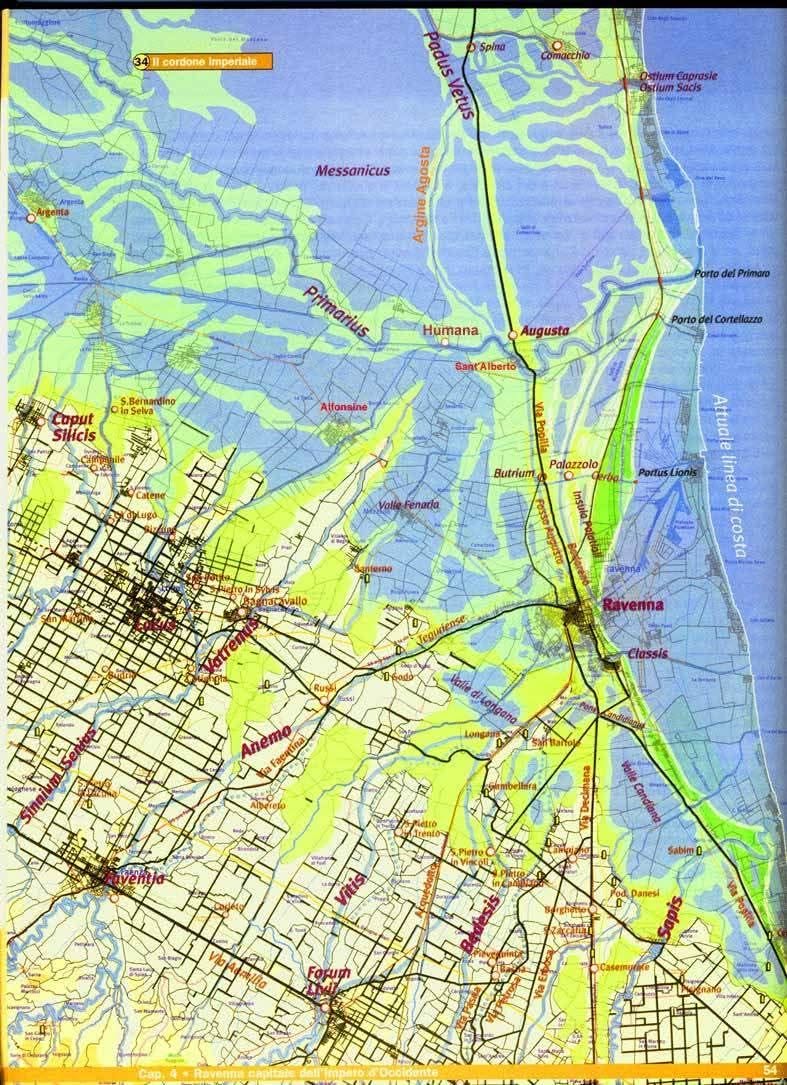
It was here that the great Roman port of Classe arose. Founded by Emperor Augustus at the end of the 1st century BC, it was destined to become one of the main naval bases of the Roman Empire. The port did not face the open sea directly, but was built within a large lagoon connected to the Adriatic Sea by a navigable channel.

In Roman times, the coastline lay several kilometres further inland than it does today, and the landscape was constantly changing. Sediments carried by rivers, particularly the Po river system and the waterways of Romagna, together with the action of the sea, gradually reshaped the area. Over the centuries, the coastline progressively advanced eastwards, creating new land and transforming lagoons and marshes into coastal plains.

To support the activities of the port and the imperial fleet, the Romans made use of, and probably encouraged the expansion of, coastal pine forests. These were essential sources of timber for shipbuilding and construction, as well as resin and pine nuts, which were already highly valued in ancient times.

After the fall of the Western Roman Empire, Ravenna retained a leading role for several centuries, first as the capital of the Ostrogothic Kingdom and later of the Byzantine Exarchate. Meanwhile, the landscape continued to evolve: sediments carried by rivers and the action of the sea gradually filled in the Classe lagoon, creating new areas of dry land.

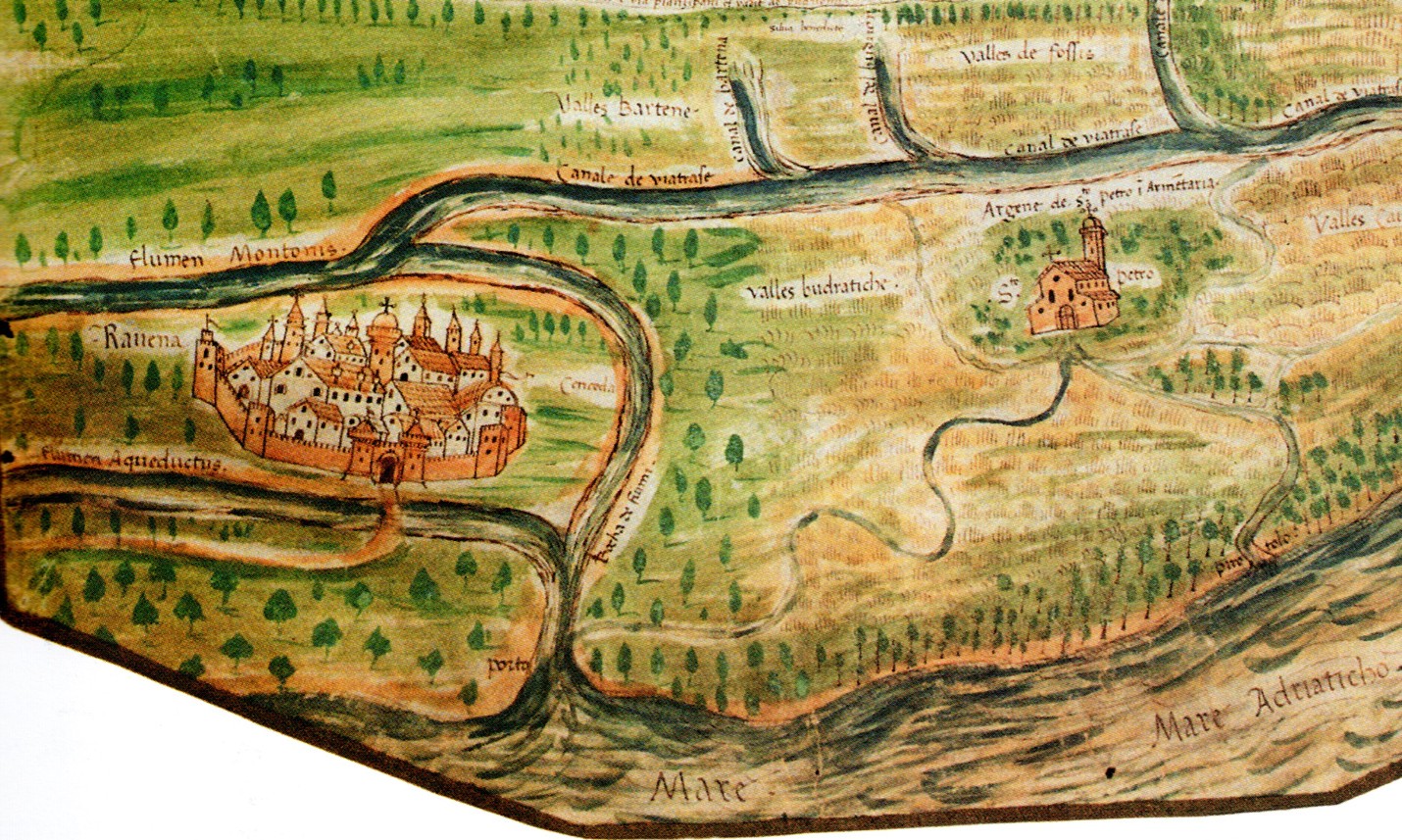
During the Middle Ages, the coastline slowly moved towards the Adriatic, while the Roman port gradually lost its importance.

The newly emerged land was progressively colonised by vegetation. Natural environments developed along the coastal dunes, eventually shaping the Ravenna coastline and favouring the growth of its pine forests.

During the Middle Ages, monasteries, abbeys and local communities played an important role in managing these areas, making use of their economic and environmental resources and helping to preserve them over time. Important religious institutions, such as the Abbey of Sant’Apollinare in Classe and the Monastery of Santa Maria in Porto, administered extensive agricultural estates, pine forests and woodland, contributing to the transformation and development of the Ravenna area.

Over the following centuries, the landscape continued to change.

Wetlands gradually gave way to pastures, cultivated fields, rice fields and, eventually, the major land reclamation projects of the 19th and 20th centuries.

This lengthy process, which lasted almost two thousand years, created the landscape on which much of the Raspona Estate developed and where, in 1964, the modern seaside resort of Lido Adriano was established.


The Raspona Estate and the Agricultural Landscape

This part of the Ravenna coastline once belonged to an area characterised by large agricultural estates, including the historic Raspona Estate, which belonged for centuries to the Rasponi family, one of Ravenna’s most important noble families. Its extensive lands stretched across the countryside, pine forests and coastline, within a landscape profoundly shaped by the presence of water.

The area had all the typical features of the Ravenna coastal plain: low-lying clay soils, crossed by canals, wetlands and wooded areas interspersed with pastures and cultivated fields. The coastal pine forests, a valuable resource since ancient times, continued to be one of the most distinctive features of the landscape.

For centuries, the Raspona Estate was primarily devoted to agriculture, livestock farming and the management of natural resources. Rural work, largely carried out by tenant farmers and sharecroppers, helped keep these lands productive despite the constant presence of water.

Between the late 19th century and the 20th century, as land reclamation progressed and modern agriculture developed, some of these properties gradually came under new forms of management, eventually passing to the Federation of Cooperatives of the Province of Ravenna. It was in this context that the rice fields which characterised the landscape of what would later become Lido Adriano developed, remaining an important feature until the early 1960s.

However, major land reclamation and water management works were necessary to make this area increasingly productive.

Land Reclamation: Turning Marshland into Productive Farmland

The transformation of the area was made possible by a long process of hydraulic engineering and land reclamation works that developed over several centuries. The first water management projects date back to the Middle Ages, but land reclamation efforts grew considerably between the 18th and 20th centuries, with the construction of new canals, embankments, pumping stations and drainage systems.

In the 18th century, during the rule of the Papal States, the construction of the Fiumi Uniti (United Rivers), formed by joining the Ronco and Montone rivers between 1737 and 1748, improved the water management system of the Ravenna area, facilitating land reclamation and the gradual recovery of agricultural land.

Throughout the 19th and 20th centuries, the completion of the hydraulic network and the introduction of water pumping stations made it possible to drain vast marshland areas, transforming them into increasingly productive farmland.

These projects not only changed the landscape but also created the conditions for agricultural development and the emergence of a new rural economy.


The Scariolanti: The Men Who Shaped the Land

The story of land reclamation in the Ravenna area is not just a story of hydraulic engineering, but above all a story of people.

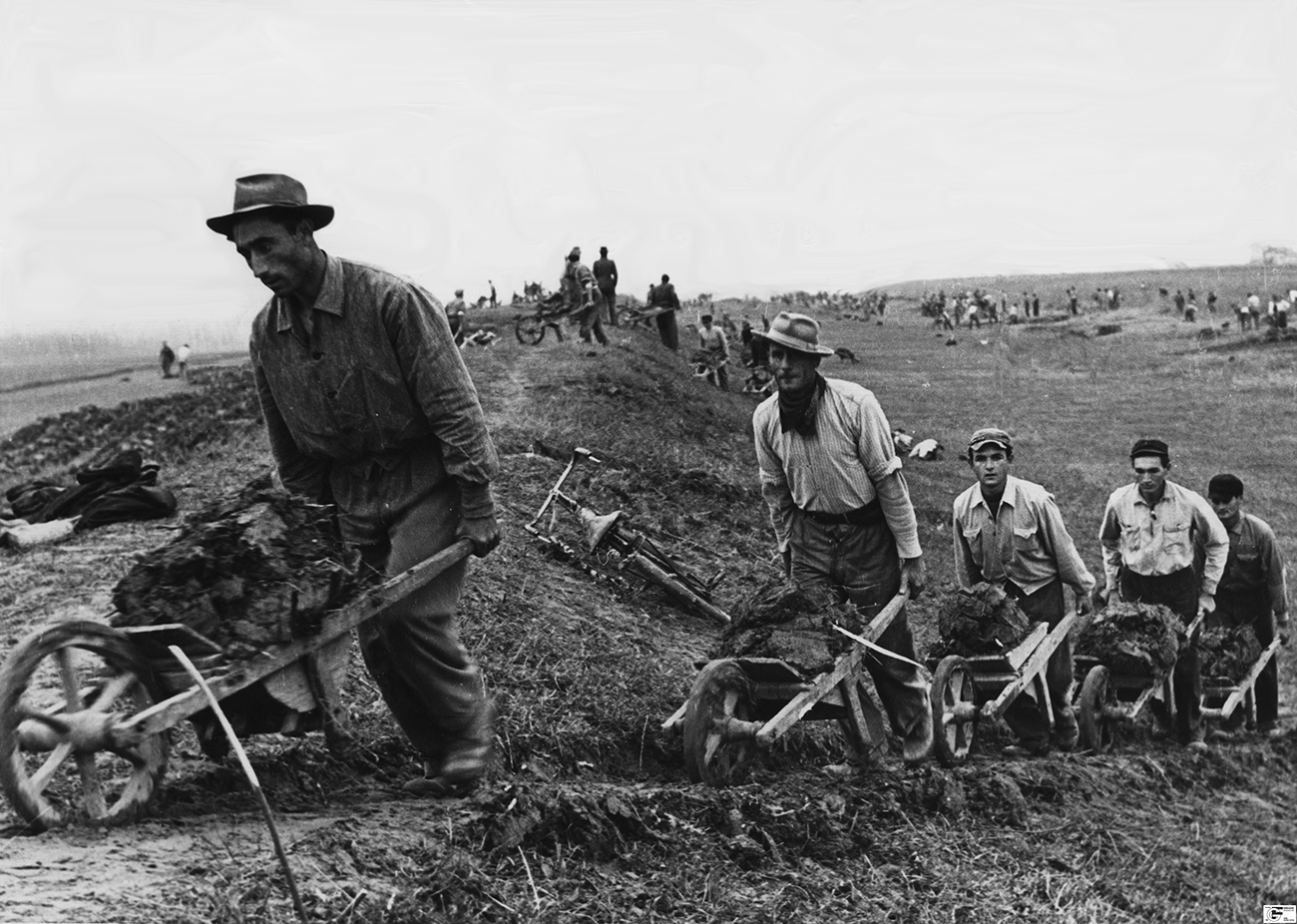
Following the major hydraulic works of the 18th century, the scariolanti played a fundamental role in land reclamation and landscape maintenance throughout the 19th and 20th centuries.

The scariolanti were specialised labourers who, armed with shovels, pickaxes and wheelbarrows, moved enormous quantities of earth every day to dig canals, build embankments and drain marshlands. They worked in extremely difficult conditions, surrounded by mud and water and exposed to harsh weather, enduring levels of physical hardship that are difficult to imagine today.

Thanks to their efforts and the major land reclamation projects carried out between the 19th and 20th centuries, vast areas of the Ravenna region were transformed into fertile and safer agricultural land. It was on these reclaimed lands that Lido Adriano would eventually be built, many years later.

Even today, the scariolanti remain one of the most important symbols of Romagna’s social history. Their work permanently transformed the landscape and made the economic and tourist development of the coastline possible.
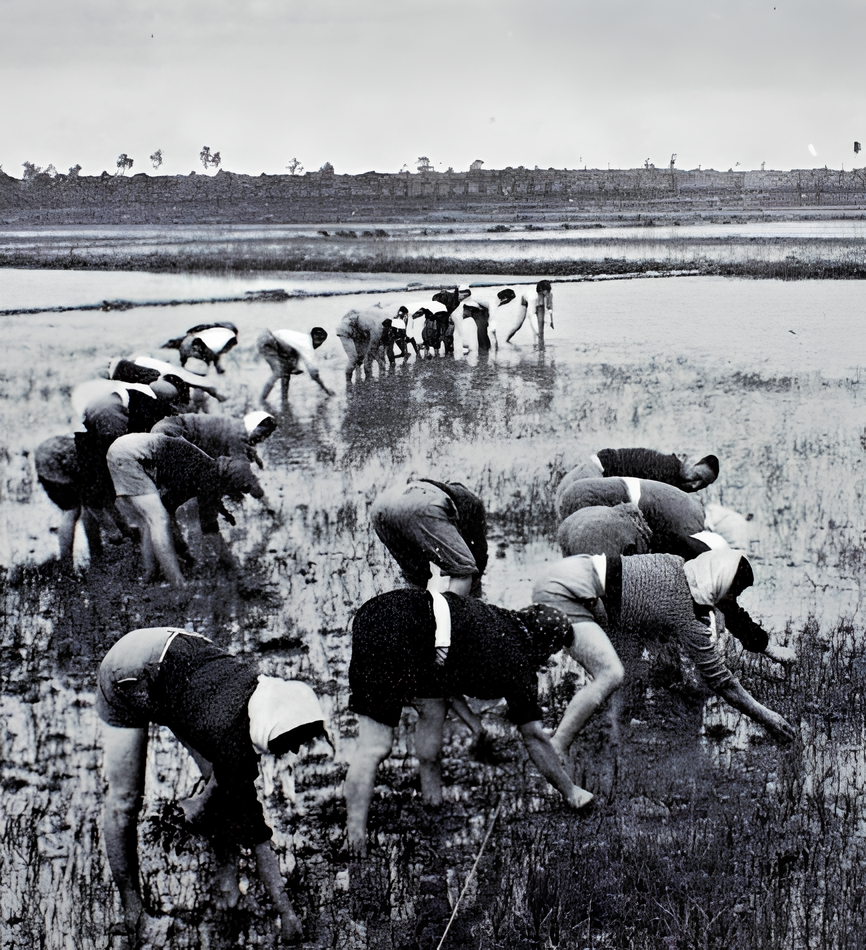
The Rice Fields: The Landscape Before the Seaside Resort

In some of the reclaimed areas along the Ravenna coastline, including the land destined to become Lido Adriano, rice cultivation became particularly important during the 20th century. Rice fields were therefore among the crops that characterised this area and would become one of the most recognisable features of the local agricultural landscape.

Until 1960, extensive areas of farmland belonging to the Federation of Cooperatives of the Province of Ravenna were flooded during the rice-growing season, creating a fascinating landscape of shimmering water, canals and reflections of the sky. Rice fields were not only an important economic resource but also one of the most distinctive features of the Ravenna coastline during the 20th century.

This agricultural landscape differed from that of the historic Raspona Estate, which for a long time had been devoted to more traditional farming, based mainly on cereal cultivation, meadows and pastures.

With the transfer of part of the land to the Federation of Cooperatives and the gradual development of modern agriculture, reclaimed areas were organised according to more productive farming methods, encouraging the expansion of rice cultivation.

Alongside rice, other important crops were also widely grown in the Ravenna area, including hemp, which was used to produce ropes, textiles and sails, as well as cereals and, in some parts of the province, tobacco.

The last rice harvest on the land destined to become Lido Adriano took place in 1960, just a few years before the beginning of the urban transformation that would give rise to the modern seaside resort.

Did You Know?

Until 1960, the area where Lido Adriano’s hotels, beach establishments and apartment buildings stand today was covered by rice fields and cultivated farmland.

For much of the year, the landscape was dominated by expanses of water, canals and embankments, creating an environment very different from the one we know today.

From Countryside to a Seaside Town

For centuries, this area remained closely connected to agriculture and water management.

Then, during the years of Italy’s economic boom, a new idea emerged: to transform this vast agricultural area into a modern seaside resort overlooking the Adriatic Sea.

This transformation would mark the next chapter in the history of Lido Adriano.