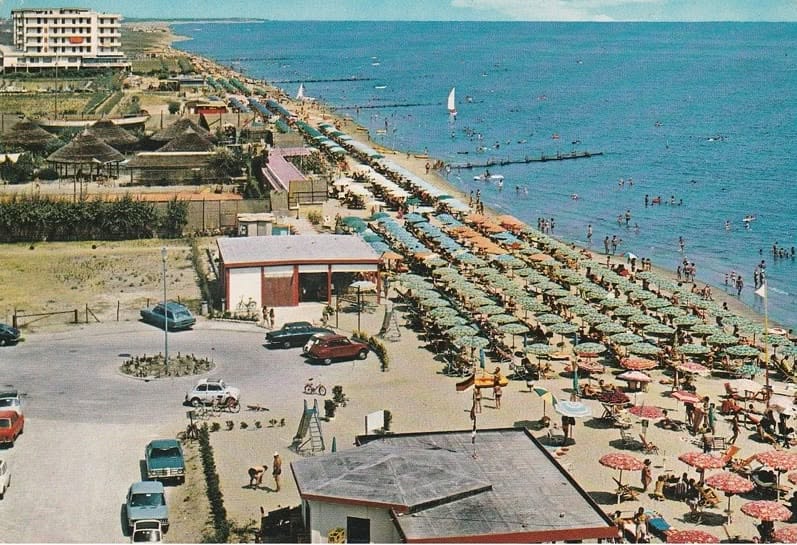
During the 1970s, Lido Adriano grew rapidly, becoming an increasingly important tourist destination on the Ravenna Riviera.
The First Hotels and the Development of Tourism
Tourism development led to the opening of the first major accommodation facilities, which helped shape the appearance and reputation of Lido Adriano.
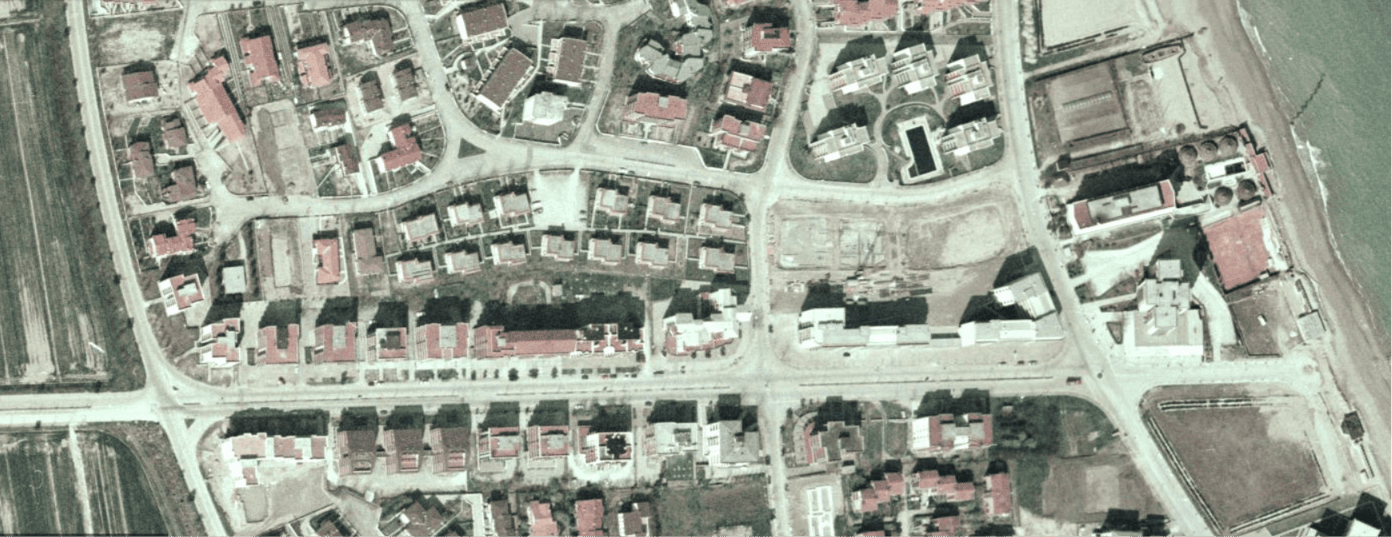
The first hotel to open was the Hotel K2, in 1966. Its opening marked a major milestone for the young seaside resort, which could now welcome its first tourists in a proper hotel. Other accommodation businesses gradually emerged around the K2, forming the first tourist centre of the town.
In the following years, the Residence Adriatico was built, becoming one of the most recognisable buildings along the coastline, together with the Hotel Azzurra, located directly by the sea and destined to become one of the area’s main hospitality landmarks. The hotel was also home to the Eva 2000 nightclub, which for many years became one of the symbols of Lido Adriano’s summer nightlife.
The resort’s growth took place during a period of great architectural ambition and a determination to create a modern seaside town. Alongside the projects that were actually completed, other ambitious developments were also conceived but never finished, such as the Ala di Berardi, an imposing structure envisioned as a landmark and innovative symbol of Lido Adriano’s development.
Although it was never completed, its story reflects the enthusiasm and confidence that characterised the early years of the resort, when an even greater tourism future was being imagined.
The growth of Lido Adriano was not driven by hotels alone. Meeting places also played an important role in shaping the town’s social life. These included La Pritona, a historic gathering place offering food, music and entertainment, and Ca’ Vinona, remembered by many as one of the iconic landmarks of Lido Adriano’s early summers.
Throughout the 1970s and 1980s, the accommodation sector continued to expand with new hotels, holiday residences and tourist apartments, welcoming Italian and international families and strengthening the resort’s position within the Romagna Riviera.
Over the years, accommodation businesses evolved alongside changes in tourism, with new owners and management arrangements. The Hotel Azzurra also entered a new chapter in 1999, when ownership passed from Rosetta Berardi to Angelo Buratti, continuing its history as part of Lido Adriano’s accommodation sector.
The opening of the first hotels therefore tells the story of the birth of the resort’s tourism identity: a story shaped by entrepreneurs, hoteliers, shopkeepers and families who transformed a new seaside settlement into a destination capable of welcoming generations of visitors.
Shops, Businesses and Community Life
Alongside the growth of tourism, a network of local businesses began to develop, gradually becoming important meeting points for both residents and visitors.
Shops, cafés, restaurants and local services helped create the atmosphere of a real town.
The growth of Lido Adriano was not just a process of urban development, but also a social transformation: new families arrived, new relationships were formed and the resort began to thrive beyond the summer months.
Società Bisanzio and the Continuation of the Original Vision
An important role in the history of Lido Adriano was played by Società Bisanzio, founded by Count Augusto Chiericati, the central figure behind the creation and development of the resort.
Chiericati promoted the project to transform the coastal area north of Ravenna into a modern seaside resort, through a plan combining urban development, residential areas, accommodation facilities and services designed to support tourism growth. Lido Adriano was therefore conceived with a long-term vision, not simply as a holiday destination but as a genuine seaside community.
Società Bisanzio accompanied the different stages of the resort’s development, contributing to the implementation of the original project through construction initiatives and the development of the surrounding area. Its history became closely intertwined with that of Lido Adriano, following its evolution from a new tourist settlement into a lively and well-organised town.
In later years, Anna Maria Chiericati also helped preserve the memory of the resort’s origins, keeping alive the connection with the original vision that had given rise to Lido Adriano.
The history of Società Bisanzio therefore represents one of the fundamental chapters in understanding the creation and transformation of Lido Adriano: a project conceived in the 1960s and developed over time thanks to the commitment of entrepreneurs, local businesses and residents.
The 1970s: Growth and New Challenges
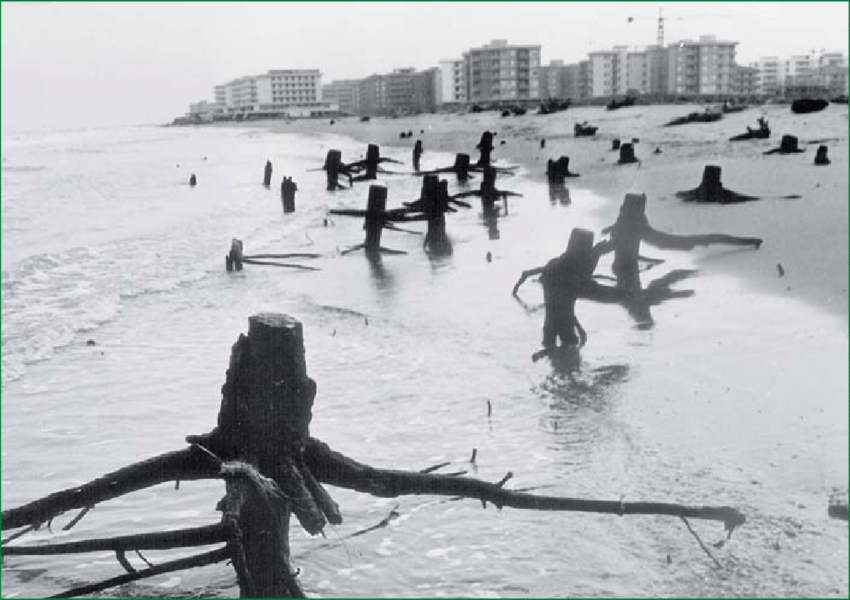
The rapid growth of Lido Adriano also brought new challenges concerning the protection of the coastal environment.
As early as the second half of the 1960s, just a few years after the resort was established, the Ravenna coastline began to experience increasingly visible effects of subsidence, the gradual sinking of the ground.
This phenomenon, caused by both natural factors and the intensive extraction of groundwater and natural gas carried out during those years, contributed to worsening beach erosion.
The severe storm surge of 1966 further exposed the vulnerability of the coastline, making it necessary to plan increasingly effective coastal protection measures.
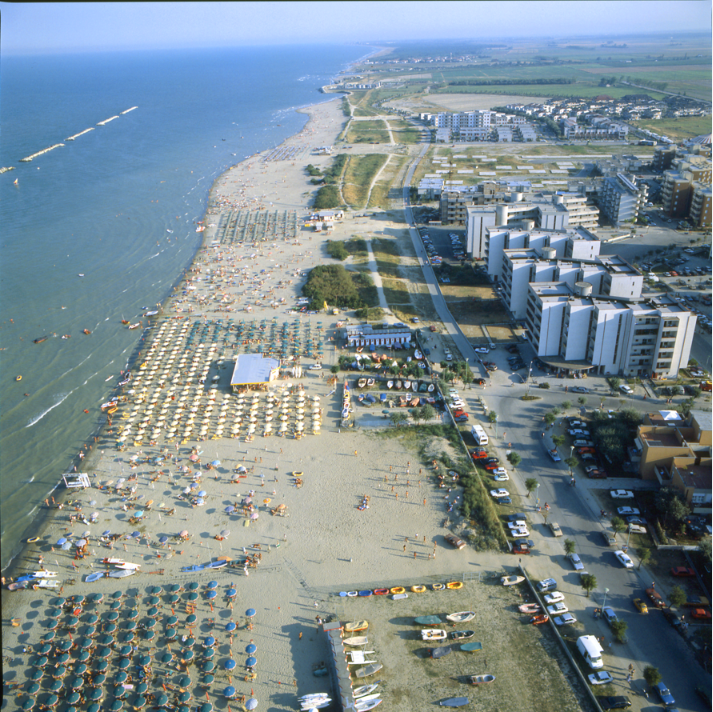
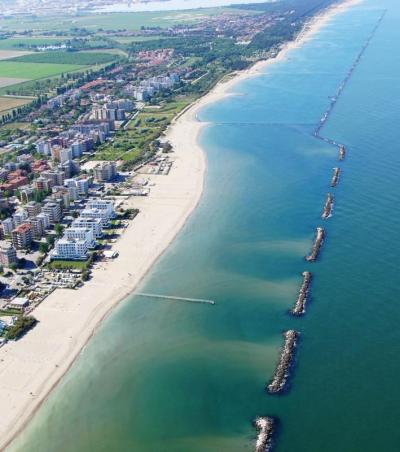
During the 1970s, the first major coastal defence works were therefore carried out, including:
- Offshore breakwaters;
- Coastal protection structures;
- Beach nourishment projects.
From that moment onwards, the history of Lido Adriano also became a story of continuous adaptation to the sea.
Between 1957 and 1977, the ground in the Ravenna area subsided by approximately 45 centimetres overall. This phenomenon contributed to the retreat of the coastline and made major coastal protection works necessary.
Even today, the beach is regularly protected through nourishment and maintenance operations.